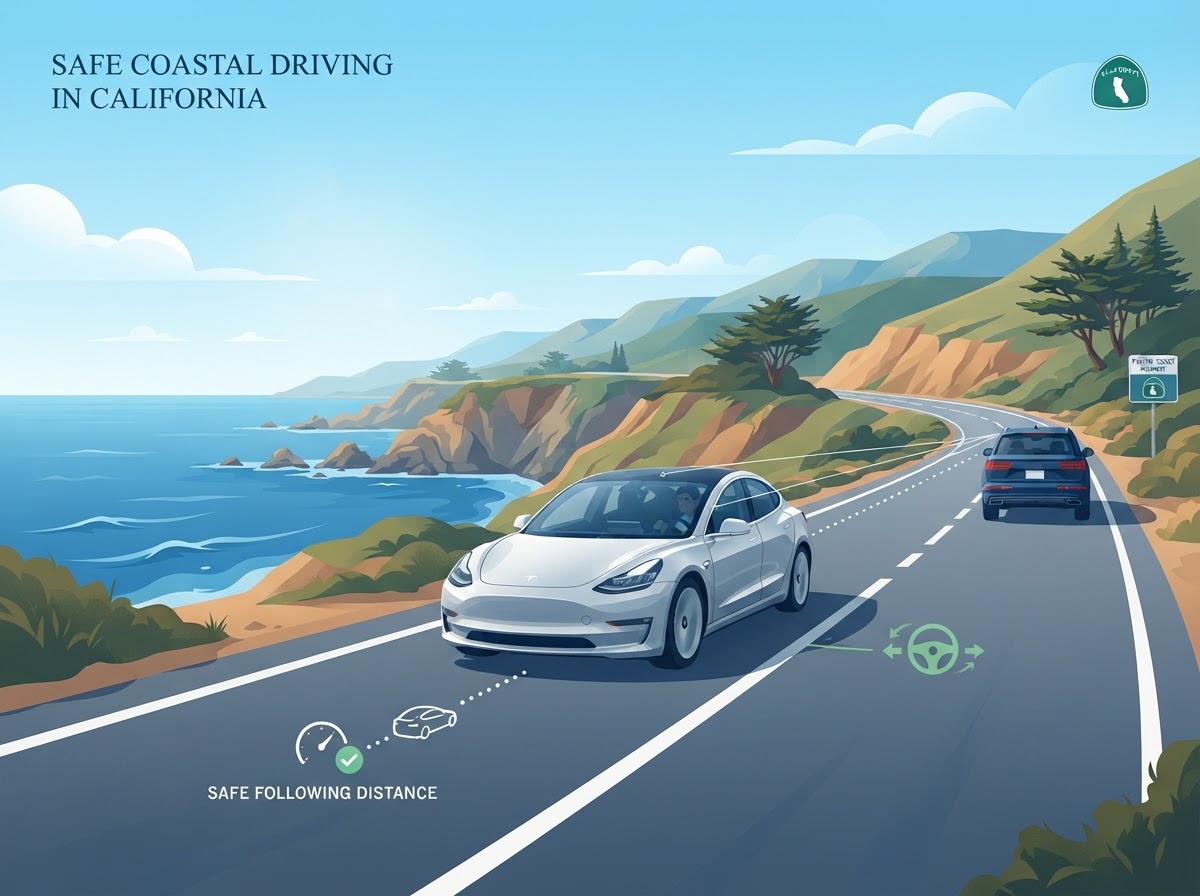

Night driving presents unique hazards: limited visibility, glare from oncoming headlights, and fatigue. A few habits reduce the risk significantly.
Keep headlights and windows clean
Dirty windshields and headlights increase glare and reduce visibility. Clean them regularly — a film on the glass scatters oncoming light exactly when you can least afford it.
Reduce speed and increase following distance
You can see less at night, so allow more time to react. Increase your following distance beyond daytime norms and never use your high beams when traffic is approaching.
Manage fatigue
Drowsy driving impairs reaction time and judgment. If you feel tired, pull over safely and rest. See our road trip safety guide for planning rest stops on long drives.
Pair these with defensive driving for the safest night driving.